A gate is the only thing we install that can injure somebody. Start with the safeties.
Vehicle gates, garage doors and parking control across the five boroughs, Long Island and Westchester: credentials, loop detection, and the entrapment protection that has to be right before any of it matters.
Two entrapment protection devices, in each direction, on every entrapment area
That is the UL 325 rule in one sentence, and it is the sentence that decides whether a gate job is done properly or is a liability sitting on a driveway.
UL 325 is the safety standard for door, gate and operator systems, and it classifies entrapment protection into types. Type A is inherent protection built into the operator itself. It senses obstruction by motor force or current and reverses. Type B1 is a non-contact sensor, in practice a photoelectric eye. Type B2 is a contact sensor, a safety edge that stops and reverses when something touches it. Type D is constant-pressure control: a device that only moves the gate while somebody holds the button, within sight of the gate.
The requirement is at least two entrapment protection devices for each potential entrapment area, in each direction of travel. The operator’s inherent Type A system counts as one of the two. An external device (a photo eye or an edge) is required as the second. On a horizontal slide gate the entrapment areas are not only the opening: contact sensors belong at the leading edge, at the trailing edge, and post-mounted on both the inside and outside.
Around the gate there are physical requirements that get ignored constantly. Warning signs on both sides. Controls located at least six feet from the gate, so a person cannot operate it while touching it. On slide gates, all openings guarded or screened from the bottom of the gate up to at least 72 inches above grade, rollers guarded, pinch points eliminated or protected. And separately from any of this, ASTM F2200 governs the gate itself: its construction, protrusions and climbability. An operator can be perfectly compliant on a gate that is not, and it is on the installer to notice.
Your gate did not break after the rainstorm. It refused to run, on purpose.
Since 2016, photoelectric sensors and contact edges on gate operators are monitored devices. The operator continuously checks them. If it detects a fault in one, or finds one disconnected, it will not run. That is not a malfunction; it is the entire design intent.
Which is why the most common gate service call in our area sounds like this: the gate worked yesterday, it rained overnight, and this morning the operator clicks and does nothing. The usual cause is a photo eye that is dirty, misaligned by a delivery truck’s mirror, or has taken water into its housing, or a safety edge whose wire has been severed by a landscaper’s trimmer. Fix the sensor and the gate runs.
The corollary matters more. On a modern operator you cannot jumper out a failed eye to keep the gate running until a part arrives, the way the trade used to. Anyone who offers to is defeating a monitored safety device on a machine that moves several hundred pounds of steel across a driveway where children and delivery drivers walk. We will not do it, and if you find a gate on your property that has been jumpered by a previous contractor, that is the first line item on our proposal.
Loops, eyes and edges: what each one is for
These get conflated constantly, including by people selling them. They do different jobs and a gate usually needs several.
| Device | Job | How it fails |
|---|---|---|
| Exit or free-exit loop | Buried wire loop that senses a vehicle leaving and opens the gate without a credential. | Shallow saw cut or cracked sealant lets water in; the loop detunes and either stops detecting or holds the gate open permanently. |
| Safety or reversing loop | Sits under the gate’s path and prevents it closing on a vehicle that is still in the opening. | Detects vehicles, not people. A safety loop is not a substitute for a photo eye and never has been. |
| Shadow loop | Directly under the gate travel, holds the gate open while a vehicle is on it. | Frequently omitted on retrofits, which is how gates come down on trailers and long wheelbases. |
| Photoelectric eye (Type B1) | Non-contact beam across the opening; stops and reverses on interruption. | Dirt, misalignment, sun directly into the receiver, water ingress. Monitored, so a fault stops the gate entirely. |
| Safety edge (Type B2) | Pressure-sensitive strip on the gate edge; stops and reverses on contact. | Wire fatigue where the edge cable crosses the moving joint, and physical damage from snow plows and trimmers. |
| Vehicle detector board | The electronics in the operator cabinet that read the loops. | Sensitivity set at commissioning drifts; large steel vehicles and motorcycles need different settings and the compromise is deliberate. |
A saw-cut loop lasts decades when it is cut to depth, wound to the right number of turns for the loop size, and sealed properly. It fails within a season when the cut is shallow, the corners are square instead of chamfered, or cheap sealant lets water track down to the wire. It is unglamorous work and it is where most gate reliability actually comes from.
How the vehicle gets identified
The right answer usually combines two of these: one for residents and one for everyone else.
- Fob or card at a gooseneck reader. Cheap and reliable, and it makes the driver lower a window. Fine in a small parking court, tiresome in winter at a busy garage. Same credential technology considerations as the front door apply. See key fob entry systems.
- Long-range reader or windshield tag. Reads from several feet, so the gate begins moving as the car approaches. The trade-off is that a tag left in a car handed to a valet or sold is a credential you no longer control.
- Radio transmitter or remote. Familiar to every resident, and generally the weakest link: fixed-code remotes are easy to capture and rolling-code ones still go missing with the car.
- Phone credential over Bluetooth. Works well at gates because the range suits a vehicle, and revocation is instant. It depends on connectivity for administration, and the outage questions on the cloud access control page apply here too.
- Keypad with visitor codes. Useful for contractors and deliveries, provided the codes are time-bounded and rotated. A permanent gate code shared with a landscaper in 2019 is not a credential, it is a rumor.
- License plate recognition. The plate becomes the credential and the driver does nothing. It is genuinely good at a residential parking gate where the same forty cars come and go, and it needs a camera position, lighting and lens choice designed around plate capture rather than a general view of the driveway.
- Telephone or video entry for visitors. The pedestal that calls the resident, who releases the gate. Essential at any gate the public arrives at, and the piece most likely to be running on infrastructure that is quietly disappearing. See below.
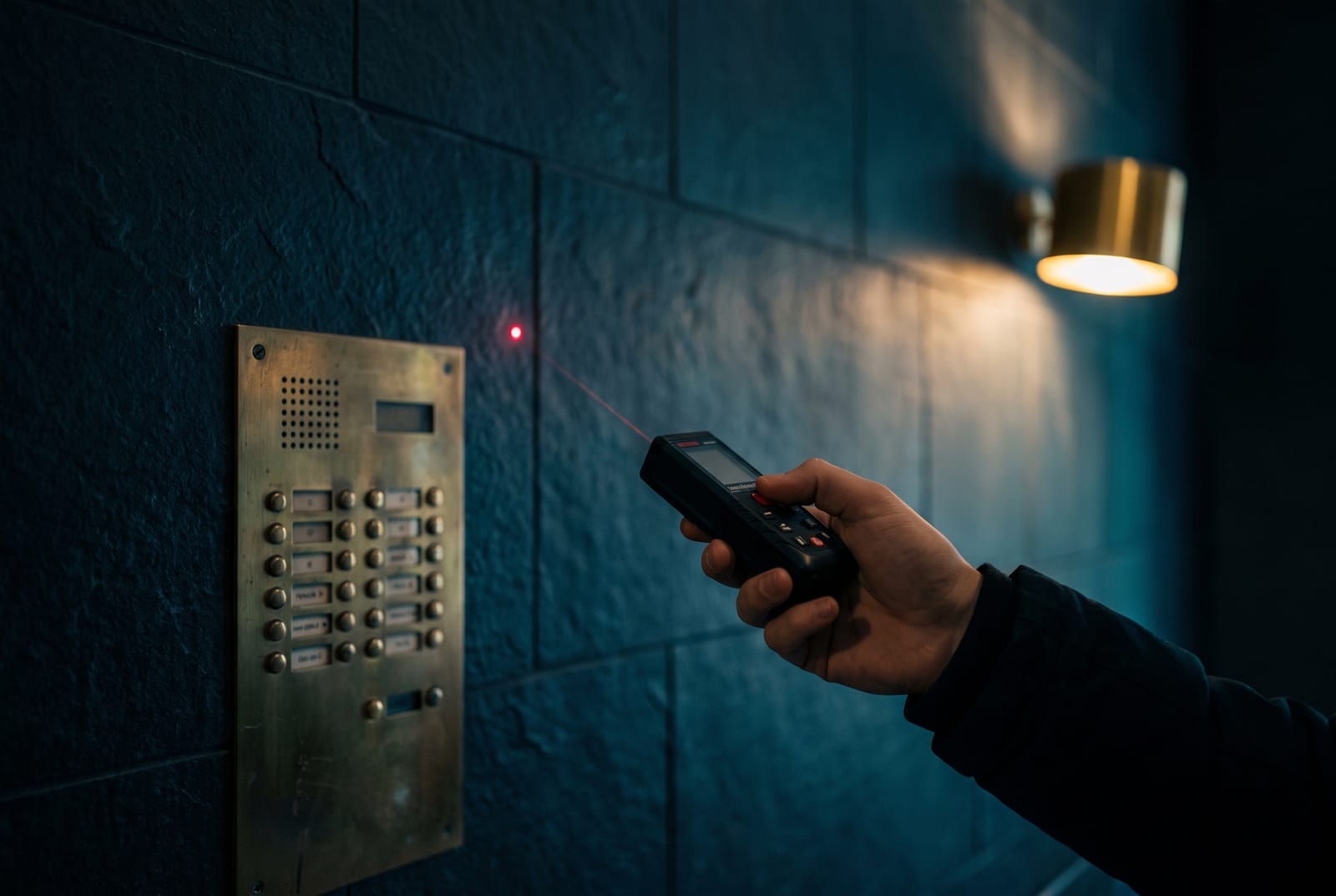
Your gate intercom was designed around a phone line that is being switched off
Almost every telephone-entry gate panel in the region (the familiar directory pedestals from the major gate brands, with panels that store thousands of phone numbers and control multiple entry points) was built on the assumption that a copper phone line would always be there. It dials the resident, the resident presses a digit, and a relay fires the gate. As carriers retire copper, those panels lose dial tone or get moved onto a voice-over-IP adapter that mangles the tones.
The symptoms are specific enough to diagnose over the phone. The panel dials and never connects. The resident answers, presses 9, and nothing happens. The tone is being transcoded and compressed out of existence somewhere between the panel and the handset. Intermittent “no dial tone” errors. Works when calling one carrier’s mobile numbers and not another’s. If any of that sounds like your gate, the panel is almost certainly fine.
There are three fixes and they cost very different amounts. A cellular communicator wired where the phone line used to land, presenting a simulated dial tone to the panel, keeps your existing hardware and adds a monthly cell charge. Current units use a multi-carrier SIM that picks among the major networks. Replacing the panel with a native cellular or IP unit is more money and gets you a modern directory and app-based release. Or you keep the carrier’s voice-over-IP conversion and have the tone passthrough verified, which sometimes works and sometimes does not survive the next carrier-side change. The same fix, incidentally, applies to whatever else in the building is still dialing out over that line.
What gate and parking work typically costs
| Scope | Typical installed range | Notes |
|---|---|---|
| Adding credential control to an existing, compliant operator: reader, gooseneck, wiring, interface | $1,400 to $3,000 | Assumes the operator is in good order and the safeties pass |
| Bringing a pre-2016 operator’s safety devices up to current monitored practice | $900 to $2,500 | Photo eyes, edges, brackets and alignment. Done before anything else on the list |
| New saw-cut loop: cut, loop wire, sealant, detector channel | $600 to $1,400 per loop | Most gates want at least an exit loop and a safety or shadow loop |
| Cellular communicator retrofit onto an existing telephone-entry panel | $700 to $1,500 | Plus a monthly cellular plan, typically modest |
| Replacing a telephone-entry pedestal with a cellular or IP entry panel | $1,800 to $4,000 | More if the pedestal, conduit or power has to be rebuilt |
| Garage or overhead door: reader, interface to the operator, safety verification | $1,200 to $2,400 | Below-grade signal survey included, because it decides the whole design |
Typical ranges in our service area, subject to survey. They exclude the gate operator itself, gate fabrication or repair, concrete and asphalt work beyond the saw cut, and the line-voltage circuit feeding the operator, which is a licensed electrician’s work. We say which items belong to which trade in the written scope rather than leaving you to discover it.
Common questions
The gate stopped working after a storm and the operator just clicks. What is it?
Nine times out of ten it is a monitored safety device reporting a fault, and the operator is refusing to run because of it. Check the photo eyes first: a lens filmed with road grit, a bracket knocked out of alignment by a truck mirror, or water sitting inside the housing will all do it. Then check the safety edge and its cable where it crosses the moving joint, and look for a trimmer cut in the conduit run.
The remaining cases are usually the vehicle detector and the loops. Water reaching a loop through a cracked sealant line detunes it, and a detuned loop can either stop calling for the gate to open or, worse, hold it open continuously so the operator times out. We diagnose in that order because it is the order of frequency, and it means most of these calls are resolved on the first visit during business hours rather than turning into a parts order.
Can you just bypass the photo eye until the replacement arrives?
No. On a 2016-or-later operator the sensors are monitored, so the operator is designed to refuse to run without them. Defeating that means deliberately disabling entrapment protection on a machine that moves hundreds of pounds of steel through a space people walk in. It also puts the property owner in a very poor position if anything happens while the bypass is in place.
What we will do is get the gate usable safely. That normally means putting it in a constant-pressure mode where an authorized person holds a button in sight of the gate to move it, or leaving it open on a fixed schedule with a temporary physical barrier, until the correct part is fitted. We carry common photo eyes and edges specifically so this is a same-visit fix wherever we can make it one.
Do we need loops, or is a photo eye enough?
They do different jobs. A photo eye is entrapment protection: it stops the gate hurting something. A loop is detection: it tells the operator a vehicle is present, so the gate opens for an exiting car or holds open while something is still in the path. Neither substitutes for the other, and a safety loop specifically does not substitute for a photo eye because a loop only sees metal vehicles. A person standing in the gateway is invisible to it.
A typical driveway gate ends up with an exit loop on the inside, a shadow or safety loop under the gate travel, and photo eyes across the opening. Where cutting the driveway is genuinely impossible (a landmarked forecourt, a deck over a garage, a surface nobody will let you saw), there are above-ground alternatives using additional beams and a call button, but they change the user experience and we would rather tell you that at survey than have you find out at handover.
Our gate intercom dials the resident, but pressing 9 does nothing.
That is the signature of a telephone-entry panel whose line has been converted to voice over IP. The signaling gets through, so the call connects and both parties can talk, but the touch tone that fires the gate relay is being transcoded and compressed somewhere in the path and never arrives as a clean tone at the panel. It usually behaves inconsistently, working for some callers and carriers and not others, which is why it gets misdiagnosed as a panel fault.
The panel is generally fine. The fix is either a cellular communicator wired where the phone line landed, which presents a simulated dial tone to the panel and takes the carrier out of the equation, or a replacement panel that is natively cellular or IP. We test the existing panel’s relay directly before recommending either, because occasionally the relay really has failed and there is no point putting a new communicator in front of a dead output.
Can we use license plates instead of fobs?
At a residential parking gate with a stable population of vehicles, plate recognition works well and residents like it because they do nothing at all. It also gives you a log that identifies vehicles rather than credentials, which is more useful than it sounds when somebody has been using a resident’s fob.
The design work is in the camera, not the software. A plate camera needs a tight field of view on the plate at a known distance, an appropriate shutter and lighting for headlight glare and night capture, and a mounting position that survives a truck backing up. A general-purpose driveway camera pointed at the gate will not do it, and the difference shows up as a read rate in the seventies that everyone finds infuriating. We also always specify a second credential path (a fob, a code or a phone) because plates get obscured by snow, bike racks and trailer hitches.
Our parking garage is below grade and the entry panel keeps dropping offline.
Almost certainly signal. Cellular coverage degrades badly below grade and in concrete parking structures, and Wi-Fi from a lobby or leasing office rarely reaches a ramp two levels down. Both are exactly where garage doors and service entrances live. Assuming coverage from a survey done at the front desk is one of the most common design errors in this trade.
The fix is to stop asking the device to bridge that distance wirelessly. Pull cable to the panel and give it a wired network path back to a closet that does have connectivity; for a garage entry that is usually a shorter run than people expect, because there is normally an electrical or telecom room on the same level. Where cable genuinely cannot be run, a directional antenna to a location with verified signal is an option, but we measure at the actual door before designing around it, and the measurement goes in the survey report.
Work that usually comes with this
Access Control Installation
Complete door-control systems, from a single door to a multi-building portfolio.
Key Fob Entry Systems
Fob-based building entry, plus the credential management that keeps it from becoming chaos.
Mobile & Cloud Access Control
Phone-as-credential systems with browser-based administration and remote unlock.
Commercial Security Cameras
Retail, restaurant, warehouse and office systems, including NDAA-compliant hardware.
Warehouses & Industrial
Loading docks, yard cameras, gate control and high-bay coverage.
Private Homes
Townhouses, brownstones and single-family homes on Long Island and in Westchester.
Send us a photo of the operator label and the gate.
The model and date on the operator tells us which safety rules apply, and the gate tells us where the entrapment areas are. That is usually enough to say what your options and your obligations are before we come out.
Sun to Thu 9am to 5pm · Fri 9am to 12pm · Sat closed