In a New York apartment building, the front door is a statute.
An entry system in a multiple dwelling is not an amenity you add when the budget allows. For a large share of the city’s rental stock it is a legal obligation with a maintenance duty and a correction clock attached to it.
What the law actually asks of your entrance
Three specific things, in one specific class of building. Most owners have heard a garbled version of this and act on the garbled version.
New York Multiple Dwelling Law §50-a is the controlling statute. It applies to a Class A multiple dwelling erected or converted to residential use after 1 January 1968. Such a building must have automatic self-closing and self-locking doors at every entrance from the street and the yard, kept locked at all times except when an attendant is on duty. And where that building contains eight or more apartments, it must also have an intercommunication system providing two-way voice communication between each apartment and the main entrance, plus the ability for the occupant to release the locking mechanism of that door from inside the apartment.
Two-way voice. Remote release. Self-locking entrance door. All three, not two of three. A building with a working buzzer that releases the door but no voice path does not meet it. Neither does a video panel that shows the lobby beautifully but whose release relay has been dead for a year.
Buildings erected or converted before 1 January 1968 are not automatically covered. This is the part most often misstated to owners. A pre-1968 building must be retrofitted where a majority of tenants consent in writing. Once that consent exists, installation must begin within 90 days and be completed within six months. That is a real deadline that starts running on a piece of paper, and it is worth knowing before a tenant association hands you one.
There is also a maintenance duty on top of the installation duty. An owner who fails to install or maintain the required equipment commits a misdemeanor under the same statute, and anyone who willfully damages or interferes with it does too. In practice that duty is what turns a dead panel into a violation rather than a nuisance.
Self-closing and self-locking are not the same requirement
| Self-closing doors | Self-locking entrance doors | |
|---|---|---|
| Where it applies | Residential buildings with three or more units: NYC Admin Code §27-2041.1, enacted by Local Law 111 of 2019, and §28-315.10 | Street and yard entrance doors of Class A multiple dwellings erected or converted after 1 January 1968: MDL §50-a |
| What it does | The door closes and latches by itself so it cannot be left ajar. This is a fire and smoke containment requirement. | The door locks by itself when it closes, so entry requires a key or a credential or someone buzzing you in. |
| Typical hardware | A properly adjusted door closer on a door whose latch actually catches in the strike | A latch or electric strike that relatches positively, plus the intercom release path back to each apartment |
| Roof doors | Required to be self-closing | Expressly not self-locking: egress from the roof has to be preserved |
| What we usually find | A closer disconnected because residents complained the door slammed, or a latch that no longer engages because the frame has moved | A strike that clicks but never relatches, so the door looks locked and is not, and a release button in half the apartments that does nothing |
The distinction matters because they are enforced by different programs and satisfied by different hardware. A closer is not a lock, and a lock on the wrong door is a code violation rather than a fix.
Working in a building where sixty people live
This is the part that separates a job that goes well from one that generates complaints for a month. New construction has no residents. An occupied building has residents, house rules, restricted work hours, an elevator that has to be protected and shared, and a hallway that has to be clean at 5 p.m. whether or not the work is finished.
The rule we design around is that no apartment loses door release overnight. That normally means running the new system alongside the old one and cutting over in stages rather than pulling the whole panel on day one. It costs a little more in labor and it removes the failure mode where a cutover overruns, half the building cannot buzz anyone in for three days, and you now have an entry-system complaint on record.
In-unit work is the other schedule risk, and it is almost never a technical one. Some percentage of units will not answer the first notice. We plan for repeat attempts, we give the super a list of the units we still need, and we tell you honestly that a 60-unit building with fifteen unreachable apartments is a two-visit job. Anyone who prices in-unit access as a single pass has not done many of these.
Pre-1960 buildings add one more constraint that has nothing to do with electronics: opening a plaster wall in a building that old triggers lead-paint work practices, and that changes containment, cleanup and cost. It is a reason to reuse the existing riser pair wherever the pair will carry the signal.
The five findings that decide your price
None of these can be established over the phone, and all five move the number by more than the choice of brand does.
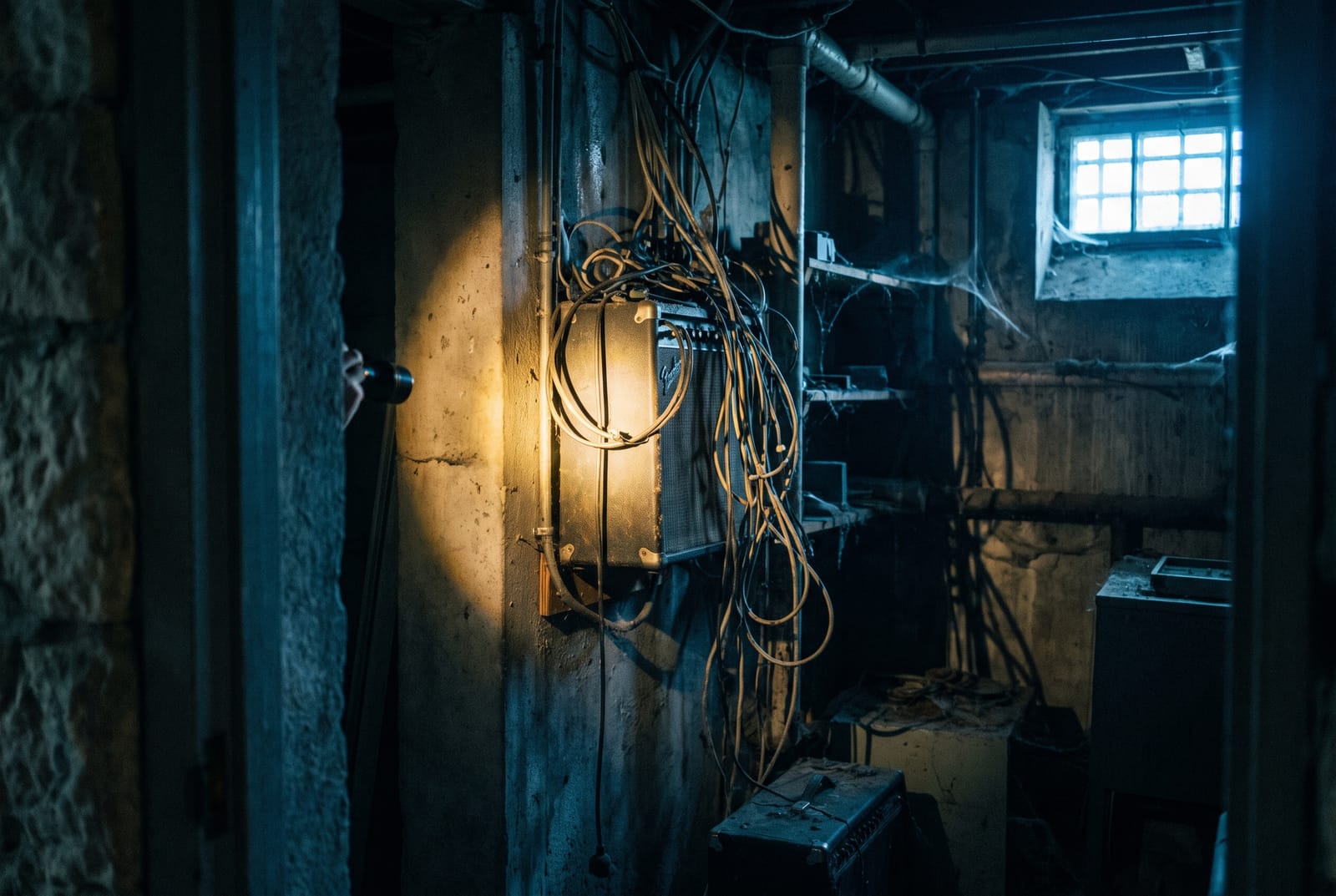
- How many usable conductors are in the riser. A great many New York buildings can carry a modern audio or even video entry system on the pair that is already there. Whether yours can is a measurement, not an opinion. The difference between reusing the riser and replacing it is an order of magnitude, not a percentage.
- What the insulation is made of. Cloth- and rubber-insulated conductors from the 1920s and 30s crack when they are disturbed, so a riser that tests fine can develop three new faults the week after someone leans on it. Where we find that, we say so before you commit, because it changes the honest recommendation.
- Whether the strike relatches. A door that opens on the buzzer but never positively relatches is not a working entrance, and it is the single most common condition behind a building that is “secured” on paper and open in fact. Deadlatch alignment on the strike face is what makes the difference between a door you can shim open with a card and one you cannot.
- What is feeding the panel. Old intercom amplifiers and their power supplies fail slowly. A standby battery that has dropped below roughly three quarters of nominal voltage will cause a supply to shed its outputs, which shows up to residents as doors and stations working intermittently for weeks before anything fully dies.
- What the door hardware legally is. A fire-rated door assembly has to stay positively latched, so electrified hardware on it must be fail-secure: power off means locked. A magnetic lock is always fail-safe and is never a substitute for a latch on a fire door. Getting this backwards is common, and it is a violation on one side and a security hole on the other.
Turnover is the running cost nobody budgets
Installation is a one-time number. Credential management is forever. A 120-unit building with normal turnover generates dozens of credential changes a year, plus lost fobs, plus the ones that simply walk when a tenant leaves. If each of those requires a technician on site, that recurring line item will exceed the difference between the cheap system and the good one within a few years.
Two design decisions determine whether that happens. The first is whether the directory and the credential list are administered from a browser by your own staff or programmed on site by a contractor. The second is the credential technology itself. 125 kHz proximity cards and fobs, the beige HID ProxCard-style credentials still in most New York buildings, transmit a fixed number in the clear with no encryption and no mutual authentication. A handheld duplicator that copies one costs about twenty dollars and takes roughly fifteen seconds, and consumer kiosks in supermarkets now do it for a few dollars. Encrypted 13.56 MHz credentials and phone-based credentials both solve that; the sensible migration is a multi-technology reader that accepts both, one re-badging cycle, then the legacy side switched off.
There is also a data obligation that arrives with any internet-connected entry system in a residential building. New York City law governing smart access in multifamily buildings requires the owner to obtain express written tenant consent, to collect only what the system genuinely needs, to keep it secure, and to destroy resident data on a short clock after move-out, with real per-tenant exposure attached. That is your obligation, not your vendor’s, which is exactly why the platform should be registered to you and configured with retention set deliberately rather than left at whatever the manufacturer shipped.
What we will not do on your entrance
We will not install a locking arrangement that prevents free egress, and we will not connect anything to your fire alarm control panel. Fire alarm work in New York City requires FDNY company recognition and certified technicians; that is a separate trade with a separate license, and where a magnetic lock has to release on alarm we specify the interface and coordinate with the contractor who holds it. Line-voltage connections at a panel or junction box are an electrician’s work, and rekeying cylinders is a locksmith’s.
Common questions
Our building went up in 1931. Are we required to have an intercom at all?
Not automatically. The state requirement for two-way voice and remote release from the apartment attaches to Class A multiple dwellings erected or converted after 1 January 1968 with eight or more apartments. A 1931 walk-up is outside that trigger as built.
The retrofit provision is what usually catches pre-1968 buildings. Where a majority of tenants consent in writing, the owner has to install the system, beginning within 90 days and finishing within six months. So the practical answer is that a pre-1968 building is not required to have one until its tenants collectively ask for it in writing, at which point the clock is short and the scope had better already be understood.
Separately, the self-closing door requirements for residential buildings with three or more units apply regardless of construction date, and that is a different obligation with a different enforcement program behind it.
HPD wrote us up for the entrance. What actually closes it?
Whatever the inspector recorded as defective, physically working again. The trap is that owners fix the visible half. If the write-up concerns the entrance door, a new closer does not help if the latch still fails to engage the strike, because the door is then self-closing and not self-locking. If it concerns the intercom, restoring the buzzer does not help if the voice path is dead, because the requirement is two-way communication and remote release together.
Practically, these get written as hazardous conditions with a short correction window and the clock does not care whether you have a contractor lined up. That is the reason to survey the entrance before you have a violation rather than after: the diagnostic visit is the slow part, and a building that already knows its riser condition can be scheduled inside a correction window instead of racing it.
We document what we found, what we changed and what it tests at, with photographs, so you have something to submit rather than a paid invoice and a hope.
Can you do this without getting into every apartment?
It depends entirely on where the equipment lives. A lobby panel, a door station, an electric strike, a power supply and a wireless or app-based release path can all be done without entering a single unit. Replacing in-unit handsets or adding in-unit video monitors obviously cannot.
This is one of the strongest practical arguments for a system where the resident’s answering device is their own phone: the in-unit half of the job disappears, along with the notices, the repeat visits and the four apartments that never answer. The trade-off is honest and worth stating: a phone-based system depends on the building’s network or on cellular service and on the resident having and charging a phone, so the design needs a documented fallback for outages and for residents who will not use an app. In most buildings that means keeping a hardwired release at the super’s station and a physical key path that does not depend on anything electronic.
A tenant moved out and never returned their fob. How much does that matter?
On an old 125 kHz proximity system, more than most owners think, not because that one fob is dangerous, but because it can be copied trivially and because on many of those systems there is no practical way to revoke a single credential. Plenty of legacy installations were set up with one shared facility code and no per-credential record at all, which means the only way to remove one fob is to re-badge the building.
On a properly administered modern system it is a thirty-second job in a browser, done by your own staff, with a log entry showing who did it and when. That difference, not the reader on the wall, is the actual product you are buying.
If you are on a legacy system and re-badging is not in this year’s budget, the interim measure that helps most is a door position switch and a forced-door alarm on the entrance, so at least the building knows when a door is opened without a valid credential or held open.
Can we pass the cost through to the tenants?
We are not the right people to answer that, and we would rather say so than guess. Cost recovery in rent-regulated units follows the housing agency’s own procedures and paperwork, and it depends on the regulatory status of the units, the nature of the improvement and the current rules, which change. That is a question for your managing agent and your counsel, before the work rather than after.
What we can do is give you the input they need: an itemized scope separating building-wide equipment from per-unit equipment, separating replacement from betterment, and separating the parts that are legally required from the parts that are elective. A single lump-sum number is very hard for anyone to work with in that conversation.
The super wants to keep the old panel as a backup. Is that reasonable?
Sometimes it is the smartest thing in the building, and sometimes it is the reason the new system never quite works. Keeping a legacy release path at the super’s station is genuinely useful: it means a network outage or a platform problem does not leave anyone stranded on the sidewalk. Keeping a whole parallel intercom energized on the same riser is different: two systems sharing conductors is a reliable way to generate hum, crosstalk and intermittent faults that take a day to chase.
The version we normally recommend is a hardwired secondary release, a documented mechanical override, and the old head end de-energized and left in place rather than removed. That preserves the fallback, removes the interference, and keeps the option of reverting if something about the new platform turns out not to suit the building.
Work that usually comes with this
Apartment Building Intercom Systems
Multi-tenant systems for 6 to 200+ units, and what MDL §50-a requires of them.
Intercom Replacement & Upgrade
Replacing obsolete systems, including retrofits that reuse existing riser cable.
Door Buzzer Systems
Buzz-in entry for walk-ups, storefronts, offices and back-of-house doors.
Key Fob Entry Systems
Fob-based building entry, plus the credential management that keeps it from becoming chaos.
Co-ops & Condos
Board-vote timelines, shareholder communication, and phased work that doesn't blow the reserve fund.
Property Management
Portfolio work: one vendor, consistent hardware, COIs on file, documented every time.
Tell us the unit count and the year it went up.
Those two facts, plus what the entrance is doing now, are enough for us to tell you what applies to your building and book a survey.
Sun to Thu 9am to 5pm · Fri 9am to 12pm · Sat closed