Intercom Systems
Installation, repair and replacement, from a six-unit walk-up buzzer to a 200-unit IP video system.
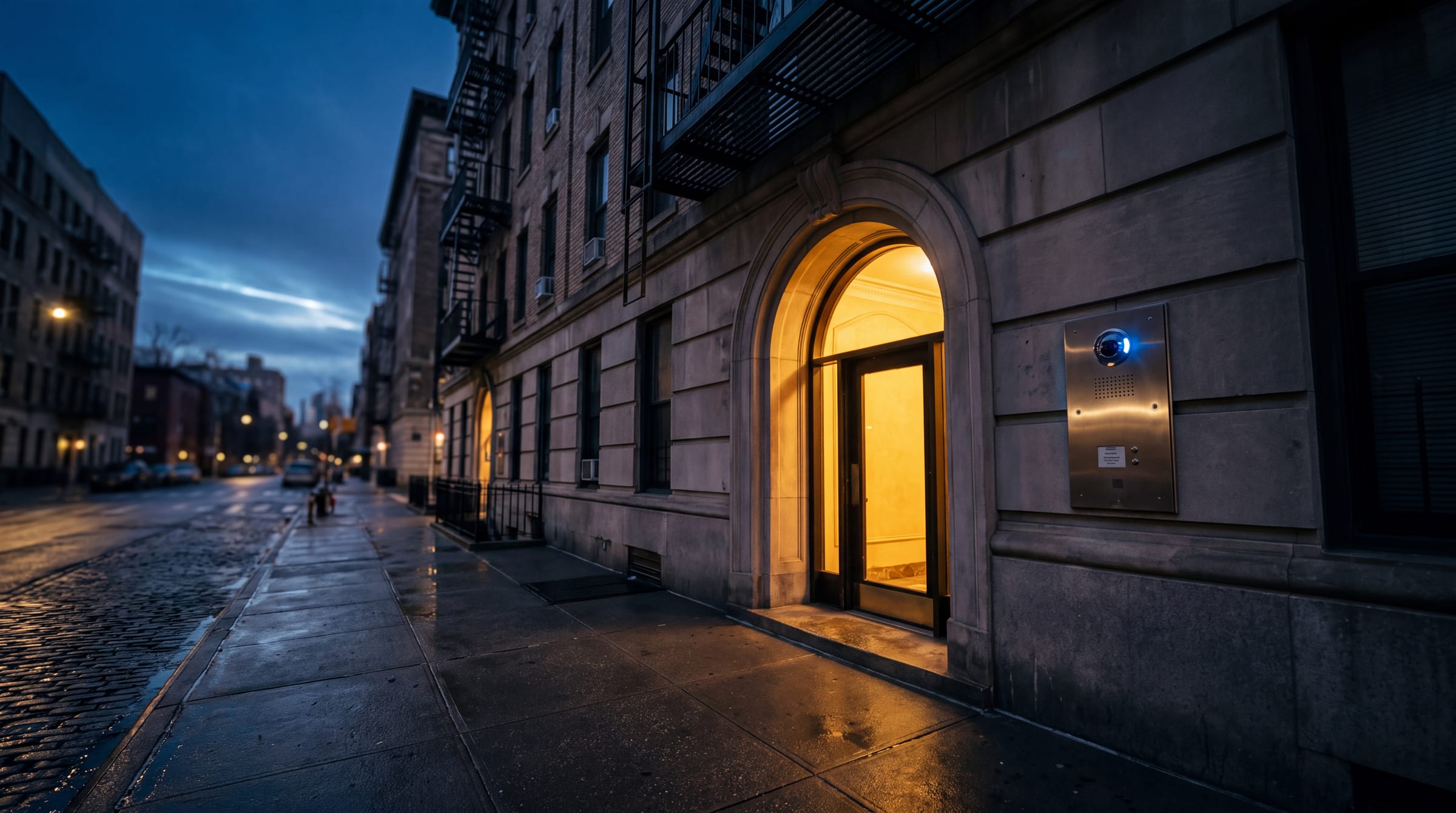
Intercoms, access control and camera systems for New York buildings, installed and repaired by people who know what’s behind a pre-war wall before they open it.
Entry, access, cameras and the cable underneath them. Most jobs touch at least two, which is exactly why splitting them across three vendors goes badly.
Installation, repair and replacement, from a six-unit walk-up buzzer to a 200-unit IP video system.
Fobs, cards, keypads and phone credentials, plus the strikes, maglocks and egress compliance behind them.
IP systems designed around identification distance and honest retention maths, not camera count.
Cat6, fiber, risers, racks and wireless. The layer everything else quietly depends on.
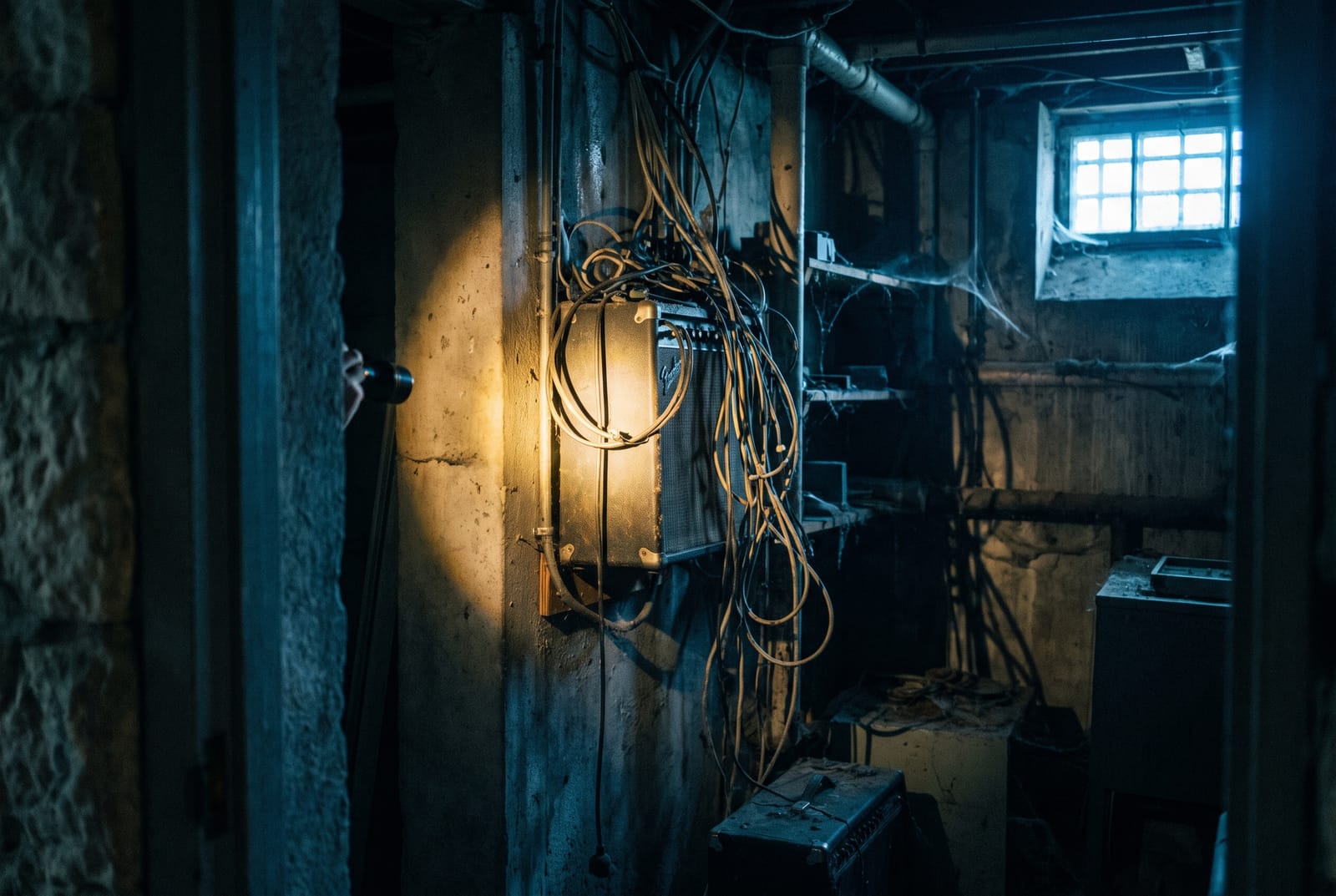
A New York building is not a greenfield install. It is a 1926 riser with cloth-insulated conductors, three previous contractors’ abandoned cable, a landmarked facade you cannot drill, a co-op board that meets once a month, and a super who is the only person who knows which basement panel actually feeds the lobby.
Nearly every failed job we get called to fix failed for the same reason: somebody quoted the equipment and ignored the building. The panel was right. The wire was wrong. Or the wire was fine and nobody checked whether the door hardware was legal to lock in the first place.
So we start with the building. We open the riser, we ring out the pairs, we photograph what we find, and we tell you what it means, including when the honest answer is that the cheap fix will fail in eighteen months.
The same sequence whether it’s one door in a storefront or a full building retrofit.
We come to the building and look at it. Riser and panel condition, existing cable type and count, door hardware, power, network, and the physical route any new cable has to take. Photographs of everything. No charge for a standard site survey inside the service area.
You get a document: exactly what hardware, exactly what cable, exactly which doors, what we are reusing, what we are replacing, what we found that is out of scope, and a fixed price. If a genuine unknown exists, such as a wall nobody can see behind until it opens, it is named as an unknown with a capped allowance, not buried.
Scheduled around the building, not around us. Tenant notices where they matter, common areas protected and cleaned daily, and the super kept in the loop. Cable is labeled at both ends because the next person deserves that.
We test every door, every station and every camera with you present. You get as-built documentation, credentials and admin logins in your name, the labeling map, and a walkthrough of how to add and revoke a user yourself.
The technical problem is similar. The politics, budgets and timelines are not.
Walk-ups and elevator buildings, 6 units to 200+, and the entry-system law that governs them.
Board-vote timelines, shareholder notices, and phased work that doesn’t drain the reserve fund.
Portfolio work: one vendor, consistent hardware, COIs on file, documented every single time.
Storefronts, offices, salons and bodegas: cameras, buzz-in entry and back-of-house control.
Loading docks, yard coverage, gate control and high-bay camera placement.
Townhouses, brownstones and single-family homes across Long Island and Westchester.
None of these are hard. Almost nobody in this trade does them.
The five boroughs, both Long Island counties and Westchester. Standard site surveys inside this area are free.
No, not for a standard survey anywhere in our service area. We come out, look at the riser, panel, doors and cable, take photographs, and write up what we find.
The exception is destructive or diagnostic investigation: opening finished walls, pulling a riser apart, or running a full point-to-point continuity test on a large legacy system. That is real labor and we quote it separately before doing any of it.
We work regular business hours, Sunday to Thursday, plus Friday mornings. We are not a 24/7 emergency operation and we would rather say so than promise a 2 a.m. callout we can’t honor.
What we do prioritize is a building where nobody can get in. A dead entry panel or a failed door release goes to the front of the queue, and in most cases we can be on site the same day or the next business day.
Usually, and that is normally the first thing we try. A large share of “the intercom is dead” calls turn out to be a failed power supply, a corroded terminal block, water in a lobby panel, or one shorted pair. All of those are repairable for a fraction of a replacement.
Where we will tell you to replace is when the manufacturer is gone and no parts exist, when the riser insulation has broken down to the point that new faults appear faster than we can clear them, or when you are spending more per year on service calls than a new system would amortize to.
Often not. A great many New York buildings can take a modern audio or even video entry system over the existing riser, depending on how many conductors are in it and what condition they are in.
That is exactly what the survey establishes. We ring out the riser and count usable pairs first, because the answer changes the price by an order of magnitude. Any contractor quoting a full rewire before checking is quoting for their own convenience, not your building.
You do. Cloud platforms are registered to your organization with your email as the owner, and you get the credentials at handover.
We have seen too many buildings discover that their “own” access system is registered to a contractor they no longer use, and that removing a former tenant’s fob requires a service call. That is not a technical limitation. It is a business model, and we don’t run it.
No. Fire alarm work in New York City requires FDNY Fire Alarm Company Recognition and certified technicians, and monitored burglar alarm service is a separate regulated activity. Neither is in our scope.
Where our work has to interface with a fire alarm, for example a magnetic lock that must release on alarm, we coordinate with the building’s licensed fire alarm contractor rather than touching that panel ourselves.
Describe the system, the symptoms and the building. You’ll get a straight technical answer and a written scope, not a sales call.
Sun to Thu 9am to 5pm · Fri 9am to 12pm · Sat closed