The Bronx is an elevator borough, and almost nobody plans for it
Fifty-four percent of Bronx housing units are in a building with an elevator. That is second only to Manhattan, and roughly 20 points ahead of Brooklyn. The stock is mid-rise, pre-war, and mostly owned in portfolios.
547,030 units, 4.5% vacancy, and no slack anywhere
The lowest vacancy rate in New York City, the lowest homeownership rate, and the third densest county in the United States at roughly 34,900 people per square mile.
The Bronx gets described as a walk-up borough and it is not. Only about 21% of units require a flight of stairs. What the borough is full of is five- and six-story pre-war elevator apartment houses (including the Grand Concourse, which holds one of the largest concentrations of Art Deco apartment buildings anywhere in the United States), alongside tenement walk-ups in Mott Haven, Melrose, Morrisania, Tremont, Fordham and Highbridge.
It is also, by a distance, the most institutional housing market in the city relative to its size: 188 NYCHA developments totaling 56,966 units, about 7.9% of the borough’s rental stock; 89 Mitchell-Lama properties and 30,627 units, more than any other borough; and Co-op City in Baychester, the largest cooperative housing development in the world. Add the HDFC co-ops and the privately managed portfolios and the buyer for most of this work is a management company or a board, not a homeowner.
With 4.5% vacancy there is no such thing as a building that can be taken offline. Every job here happens with every unit occupied, which is the single biggest constraint on how work gets sequenced and why we phase entry-system cutovers so that nobody loses door release overnight.
The lobby door and the intercom are compliance items, not amenities
The Bronx carries the highest housing code violation rates in the city, and two of the most routinely written items are ours: an entrance door that no longer self-closes and latches, and an intercom that does not work.
Which rule reaches your building depends on when it went up, and in this borough that usually cuts the same way. The state provision everybody quotes, Multiple Dwelling Law § 50-a, only reaches a Class A multiple dwelling erected or converted after 1 January 1968 with eight or more apartments. Most of the Bronx’s five- and six-story pre-war stock, including nearly all of the Grand Concourse, is older than that and sits outside it entirely. What does reach almost every building here is the city’s self-closing entrance door requirement, which applies at three or more dwelling units regardless of age, and that is the item an inspector actually writes.
The practical consequence in a 1931 elevator building is that the compliance problem is the door, not the panel. An owner who replaces the intercom and leaves the closer out of adjustment has bought the wrong half. Going the other way, in an older building that genuinely wants the full two-way voice and remote release retrofit, the route is written consent from a majority of tenants, and in a Mitchell-Lama or a large rent-regulated property that is an organizing exercise with a calendar of its own, not a purchase order.
What we find on site is rarely a broken statute and usually a broken adjustment. The closer has been dialed back until the door drifts shut without ever latching, or it was removed because tenants complained about the slam, or the strike gap has opened up as the frame moved and the latch now rides over the keeper. The system reads as “the buzzer is dead”; the door was simply never locked. Fixing that costs a fraction of a new panel and clears the item.
One thing that is never a fix: chaining or blocking a door in the egress path. Egress hardware has to be maintained in working order at all times under the Fire Code. If a roof or rear door is being propped, the answer is monitoring it, not defeating it.
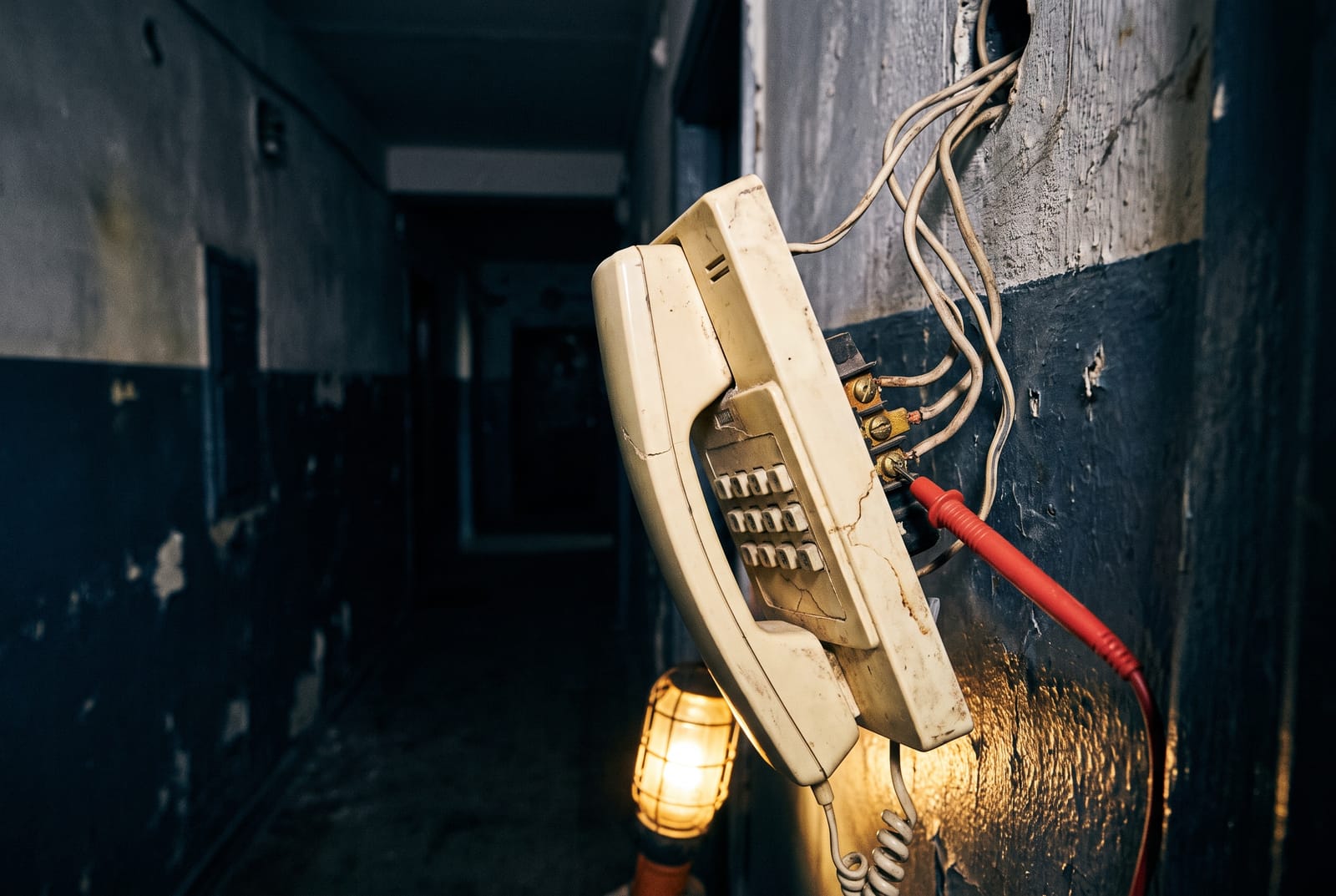
What actually survives in a Bronx lobby
This is a genuinely borough-specific spec. The panel that is right for a Park Slope parlor door will not last a year on a heavily trafficked lobby in the South Bronx, and the reverse is equally true.
- Flush mount, so there is no lip. A surface box gives a pry bar somewhere to start. Flush-mounted into the existing opening with a stainless faceplate and security fasteners removes the leverage that does most of the damage.
- Stainless, not aluminum or molded plastic. The first parts to fail are the speaker grille and the microphone port. A punched stainless grille takes abuse that a plastic mesh does not, and the difference in price is smaller than one service call.
- A tamper switch that is actually monitored. A tamper contact wired to nothing tells you nothing. Reported as an input to the system, it means the office knows a panel was opened on Sunday night rather than discovering it on Tuesday when a tenant complains.
- Cameras in impact-rated housings, mounted out of easy reach. A dome at nine feet in a vestibule is a target. The same camera at twelve feet, in a rated housing, on a wall rather than a suspended fitting, records for years.
- Power supply and batteries behind a locked door. Not in the vestibule cabinet under the panel, which is where they end up in a hurry and where they get taken. And the long unshielded run from a basement supply out to an entry panel on an exterior wall is exactly where surges land. Suppression on that circuit is cheap insurance.
- Reuse the existing opening in an Art Deco lobby. Cutting a fresh 12 by 20 inch flush box into an original marble or terrazzo wainscot on the Grand Concourse is not reversible and boards do notice. An adapter plate sized to the old mail-and-directory opening, in a matched finish, keeps the lobby intact and usually costs less than the masonry work would have.
One platform across forty buildings, and the arithmetic nobody shows you
Most of our Bronx conversations start with a portfolio rather than a building: ten, forty, sometimes two hundred properties under one management company, each with its own vintage of intercom, its own directory format and its own box of fobs that nobody has reconciled since 2011.
Standardizing is worth doing, and the reason is operational rather than aesthetic. One credential format means a super covering nine buildings carries one fob instead of nine. One platform means a move-out is processed by the office in a browser rather than by a truck roll. Per-building reporting means an owner can see which properties generate the service calls, which is usually a very different list from the one people assume.
Here is the trade-off, stated honestly. Cloud-managed platforms charge per door, per month, forever. That is a fair price for administration you no longer have to staff, but before signing, multiply the per-door figure by your door count and by sixty months, and compare that number to the hardware. On a large portfolio the license outgrows the equipment quickly. On-premises systems avoid the subscription, and in exchange you own a server, its backups, its remote access and its patching, and administration tends to leave the building when the one person who knew the password does. Neither is the right answer everywhere. What we will not do is present one of them as though the other did not exist.
Whichever way it goes, the accounts are registered to your organization with your email as the owner, and you get the credentials at handover. We have seen too many buildings discover that removing a former tenant’s fob requires a service call to a contractor they stopped using in 2019.
Nobody comes in through the front door you just hardened
Spend the whole budget on a lobby panel and you will still be robbed through the rear yard door, the roof bulkhead, or the boiler room off the areaway. On attached six-story blocks the roof is a street: adjoining parapets let someone cross from a neighboring building and walk down your stairs, and the bulkhead door is the one that is propped for the summer. Rear doors get blocked open by anyone bringing something in, and stay that way.
The fix costs a fraction of the front. A door position switch on each of those doors, reported as a monitored input with a held-open timer, means the system tells you a door has been standing open for four minutes. On the elevator side, the useful control in a mid-rise Bronx building is usually not per-floor restriction for privacy but simply keeping non-residents off the upper landings and the roof, which often means a reader at the elevator lobby and hardware on the stair and bulkhead doors, rather than the more expensive work of putting a reader in the cab and running its output down the traveling cable to the machine room.
Commercially the borough runs on corridors: Belmont and Arthur Avenue at roughly 415 businesses, Fordham Road at 333, Morris Park at 315, Third Avenue at The Hub at 312, Throggs Neck at 281, Jerome-Gun Hill at 230, Westchester Square at 190, Southern Boulevard at 182, Kingsbridge at 181 and White Plains Road at 105. And at Hunts Point sits the largest wholesale food market complex in the region: truck gates, plate recognition at the entrance, yard cameras and dock doors. One detail from that work worth naming: readers and cameras on a refrigerated dock face a humidity swing every time the door opens, and equipment rated for the temperature but not for the condensation cycling fails within a season.
Bronx neighborhoods we work in
Twenty-five ZIP codes, 10451 through 10475. Riverdale, Fieldston and Spuyten Duyvil are a genuinely different market from the South Bronx and we scope them differently.
South Bronx
13 areas areas- Mott Haven
- Port Morris
- The Hub
- Melrose
- Morrisania
- Claremont
- Crotona Park East
- Longwood
- Hunts Point
- Highbridge
- Concourse
- Concourse Village
- Mount Eden
West Bronx
15 areas areas- Mount Hope
- Morris Heights
- University Heights
- Tremont
- East Tremont
- West Farms
- Belmont
- Arthur Avenue
- Fordham
- Bedford Park
- Norwood
- Jerome Park
- Kingsbridge
- Kingsbridge Heights
- Van Cortlandt Village
Riverdale and the northwest
6 areas areas- Riverdale
- Central Riverdale
- North Riverdale
- Fieldston
- Spuyten Duyvil
- Woodlawn
North and East Bronx
25 areas areas- Wakefield
- Williamsbridge
- Olinville
- Edenwald
- Eastchester
- Baychester
- Co-op City
- Allerton
- Bronxdale
- Pelham Gardens
- Pelham Parkway
- Pelham Bay
- Country Club
- Morris Park
- Van Nest
- Westchester Square
- Parkchester
- Castle Hill
- Soundview
- Clason Point
- Schuylerville
- Throggs Neck
- Edgewater Park
- Locust Point
- City Island
Common questions
HPD wrote us up for the entrance door and the intercom. What actually clears it?
A door that closes and latches on its own every time, a lock that holds, and an intercom that gives two-way voice and a working release to every apartment. Inspectors test the physical condition, not the invoice, so a new panel on a door that still does not latch clears nothing.
We survey with that in mind: closer condition and adjustment, strike alignment and gap, frame movement, the latch itself, then the panel, the riser and each unit’s station. A hazardous or immediately hazardous item carries a short correction window, so we prioritize buildings in that position and we photograph the finished condition, per door and per unit, so you have documentation to submit rather than a description.
Where the repair is genuinely a repair (a failed power supply, a corroded terminal block, water in the panel, one shorted pair), that is what we quote. We do not use a violation as a lever to sell a building-wide replacement it does not need.
We manage forty buildings. Can they all run on one system?
Yes, and the value is administrative rather than technical: one credential format so supers carry one fob, one place to add and revoke, and per-building reporting so you can see which properties are actually generating calls.
Two cautions. Standardizing does not mean replacing everything at once. The sensible path is to fix the platform and the credential standard now, then convert buildings as they need work, so the capital is spread over years instead of quarters. And before you commit to a cloud platform across a large portfolio, do the multiplication: per-door monthly licensing across hundreds of doors over five years is a serious number, and it belongs in the comparison alongside the hardware, not in a footnote.
Our panel gets destroyed every few months. What survives?
Flush-mounted stainless with security fasteners and no exposed lip, a punched metal speaker grille rather than plastic, a monitored tamper contact, and the power supply behind a locked door instead of in the vestibule under the panel. That combination changes the failure rate more than any brand choice does.
Then look at why it is being attacked. In a lot of buildings the panel is damaged by people who live there and cannot get in: a station that has not worked in two years, a directory nobody has updated, so tenants prop the door and force the panel instead. A system that reliably works is the most effective vandal-resistance measure available, and it is usually cheaper than the fourth replacement faceplate.
Our building is a 1938 elevator building. Can we restrict which floors people reach?
Technically yes. A reader goes in the cab, its output runs down the traveling cable to a controller in the machine room, and relays there sit in series with the floor buttons so a credential enables only the floors it should. The gating question is whether the traveling cable has spare conductors; if it does not, adding them is the elevator contractor’s scope and schedule, not ours, and that needs to be established before anyone commits to a price.
The question we would ask first, though, is what problem you are solving. In most mid-rise Bronx buildings the issue is not neighbor-to-neighbor privacy, it is non-residents reaching the upper landings and the roof. A reader at the elevator lobby plus proper hardware and monitored contacts on the stair and bulkhead doors usually delivers more security per dollar than in-cab floor restriction, and it does not involve the elevator company at all.
Is an intercom actually required in our building, or is it optional?
It depends on when the building was erected or converted. New York Multiple Dwelling Law § 50-a applies to Class A multiple dwellings erected or converted to residential use after 1 January 1968 that contain eight or more apartments: those must have an automatic self-locking entrance door, two-way voice between each apartment and a person outside that door, and a release the occupant can operate from the apartment. Much of the Bronx’s pre-war stock falls outside that date test.
That is not the end of it, though. A retrofit can be required on the written consent of a majority of tenants, and separately the self-closing entrance door requirement applies to residential buildings with three or more dwelling units regardless of age. So a pre-war building with no intercom may be compliant today and still be one tenant petition away from an obligation, which is worth knowing before a capital plan is set rather than after.
Riverdale is nothing like the rest of the borough. Do you work up there?
Yes, and you are right that it is a different job. Riverdale, Fieldston and Spuyten Duyvil hold a cluster of high-rise co-ops with attended lobbies and garages alongside detached single-family houses on large lots, and Fieldston is a designated historic district where street-visible hardware needs a Landmarks permit before any Buildings filing.
So the work up there looks more like the Manhattan and Westchester end of what we do: elevator and garage credentials, package rooms and visitor management in the co-ops; driveway, garage and camera work at the houses. The same is true at the other end of the borough: Throggs Neck, Country Club, Edgewater Park, Silver Beach, Locust Point and City Island are one- and two-family territory with driveways, and they get scoped that way rather than as multifamily.
Work that usually comes with this
Intercom Repair
Diagnosis and repair of dead handsets, silent panels, buzzers that ring but won't release.
Apartment Building Intercom Systems
Multi-tenant systems for 6 to 200+ units, and what MDL §50-a requires of them.
Key Fob Entry Systems
Fob-based building entry, plus the credential management that keeps it from becoming chaos.
Access Control Installation
Complete door-control systems, from a single door to a multi-building portfolio.
Property Management
Portfolio work: one vendor, consistent hardware, COIs on file, documented every time.
Apartment Buildings
Walk-ups and elevator buildings, 6 units to 200+, and the law that governs their entry systems.
Send the address, or the list of them.
One building or forty. We’ll survey, photograph the condition of each entrance and riser, and give you a written scope you can put in front of an owner or a board.
Sun to Thu 9am to 5pm · Fri 9am to 12pm · Sat closed