In Queens, one house is four separate doors
Queens is the borough of the two-family house with its own driveway. That means front door, garden-level door, side door and garage: four openings on a property Manhattan would treat as one address.
The lowest vacancy, the largest land area, the smallest buildings
896,333 housing units spread across 108.7 square miles, more land than any other borough, with just 5.5% vacancy, the tightest in New York City.
Only 31% of Queens units sit in a building with an elevator. Roughly 30% are in duplexes, converted houses and small apartment buildings, about 19% are detached single-family and another 9% are attached row houses. Queens holds something on the order of half of every two-family converted dwelling in New York City, and homeownership runs between 43% and 47%, second only to Staten Island.
Practically, that means the person paying for the work usually lives in the building and rents part of it out. There is no board, no managing agent and no alteration agreement. There is an owner who wants the tenant upstairs to have a working buzzer, a credential that stops working when the lease ends, and a way to see who is at the side door without walking down to it.
Layered on top of that are the campuses: Jackson Heights (a nationally recognized garden-apartment district), Sunnyside Gardens, Boulevard Gardens, Forest Hills Gardens, Rego Park, Electchester, Pomonok, Glen Oaks Village, North Shore Towers, Bay Terrace, LeFrak City and Rochdale Village. And at the other extreme, the tower boom in Long Island City, where the Hunters Point area roughly tripled in population between 2010 and 2020, a 198% increase, the fastest in the city. Three completely different wiring problems inside one borough.
One honest scheduling note. Queens is 108.7 square miles. Douglaston to Far Rockaway is a real drive, and we batch work by area rather than pretending otherwise. If your job is small and out on the peninsula, we will usually tell you the week we are already going to be nearby.
Which of the four doors gets what
The standard Queens property has a front door serving two units, a garden-level or basement entrance at the side or under the steps, a door off the driveway, and a garage, attached or standing at the back of the lot. Every one of them is a way in, and they do not all need the same thing.
Front door: a two-button entry panel or two separate stations, with video, and each unit answering only its own button. The failure we get called to fix constantly is a panel wired so both buttons ring both units, or a single button that rings the owner and leaves the tenant to come down and open the door for their own visitors.
Garden level: its own station and its own strike if a separate household enters that way. This door is nearly always the one that was skipped, and it is nearly always the one the tenant actually uses.
Driveway side door: credential-only, no station. It is out of sight of the street behind the fence line, which makes it the most attractive opening on the property and the one worth a door position switch so you know if it has been left standing open.
Garage: a controller for the overhead door and, more importantly, attention to the service door beside it, which in most Queens garages is a hollow slab with a knob lock and no contact on it at all.
The credential structure matters more than the hardware. Each unit gets its own group, so an owner-occupant can revoke a departing tenant’s access without changing their own, and can issue a credential to a cleaner or contractor that only works during set hours and expires on its own.
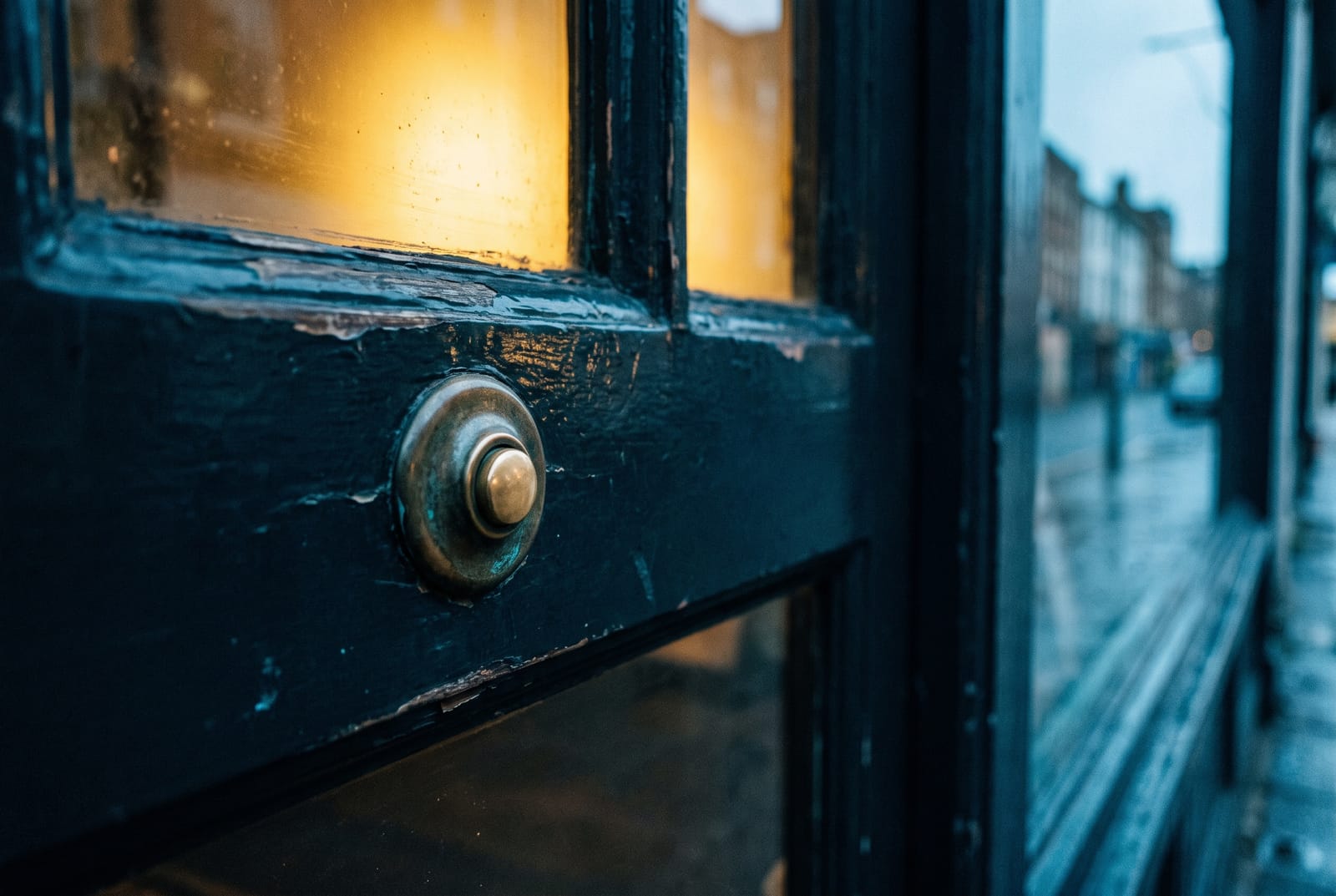
Gate operators come with obligations most installers ignore
Queens and Staten Island are where driveway gates actually sell in this city. They are also the part of our trade with the clearest liability attached, and the rules changed in a way many people still haven’t noticed.
- Two entrapment protection devices, per entrapment area, per direction of travel. The operator’s own inherent obstruction sensing counts as one. A second, external device is required: a photoelectric eye or a contact safety edge. One is never enough, whatever the operator’s box says.
- Since 2016 those external devices are monitored. The operator watches them and refuses to run if it senses a fault or if they are simply not connected. This is why a modern gate stops working when a photo eye is dirty, knocked out of alignment by a delivery truck, or full of water, and why nobody can jumper out a failed eye the way they used to. If your gate has been dead since a landscaper clipped a wire, that is almost certainly the cause.
- Controls at least six feet from the gate. So that nobody can operate it while touching it. That single rule decides where the keypad or reader pedestal can physically go, and it frequently means a pedestal in the driveway rather than a reader on the gate post the client had in mind.
- Slide gates have extra requirements. Openings guarded or screened from the bottom of the gate to at least 72 inches above grade, rollers guarded, pinch points eliminated, and contact sensors at the leading edge, the trailing edge and post-mounted on both the inside and the outside.
- The gate itself is a separate standard from the operator. An operator can be perfectly compliant on a gate that is not: protrusions, climbable infill, wrong construction. Automating a non-conforming gate is how an installer inherits a problem, so we assess the gate before we quote the operator.
- Slope and run-back beat everything. A swing gate across a driveway that rises toward the house has to clear the grade through its whole arc, and a slide gate needs clear run-back roughly the length of the gate plus the operator pad. A great many Queens driveways cannot give either, which is a conversation to have before hardware is ordered, not after.
Thirty entrances, one property, and a 328-foot ceiling
The garden-apartment co-ops are the most misquoted work in the borough. A property in Glen Oaks, Electchester, Pomonok, Bay Terrace or Sunnyside Gardens can have twenty to sixty separate low-rise building entrances spread over several acres, each with its own vestibule and its own directory. Contractors price it as though it were one lobby multiplied, and then discover the topology.
The hard limit is that a Cat6 channel carrying power over Ethernet stops at 100 meters (328 feet), and there is no clever way around it. You cannot home-run forty doors across six acres to one closet. So the design is per-cluster: a local switch or injector serving the entrances within reach of it, cloud-managed door groups so a single credential list covers the whole property, and a backbone between clusters.
That backbone should be fiber, and not only for distance. A copper run between two separate structures ties their electrical systems together, which means it needs proper bonding and surge protection at both ends or a surge on one building finds its way into the network of the next. Fiber carries no metal and sidesteps the problem entirely. On a campus with a dozen buildings that is the difference between a system that survives a summer and one that loses a switch every storm.
Cable rating is the other thing inspectors actually look at. General-purpose PVC cable may not be used in a riser shaft or a plenum; riser-rated cable is required in vertical shafts, plenum-rated where air is handled. On a low-rise campus the plenum question comes up in the corridors, and getting it wrong is a straightforward failure on inspection rather than a matter of opinion.
Retail spines, freight and the airports
Queens has 13 business improvement districts and the busiest of them is Downtown Flushing, covering roughly 1,500 businesses around Main Street and Roosevelt Avenue. Downtown Jamaica runs about 600, the Jamaica Avenue corridor another 420, Steinway Street in Astoria 338, Myrtle Avenue in Ridgewood 333, Sunnyside Shines 265, the Long Island City Partnership 245 and the 82nd Street Partnership in Jackson Heights 182, plus non-BID spines like Roosevelt Avenue, Bell Boulevard in Bayside and Austin Street in Forest Hills.
The freight side is unusual to this borough. GatewayJFK covers roughly 600 businesses in the air-cargo district off Rockaway Boulevard, and Maspeth and Long Island City hold two of the city’s industrial business zones. That work is different again: truck gates rather than pedestrian doors, license plate recognition at the entrance so a vehicle is identified before the driver is, separate yard and dock credentials, and camera coverage sized to read a container number and a plate rather than to look impressive on a monitor wall.
And in the new Long Island City towers the access problem is the amenity layer (package room, bike room, parking garage, roof deck, gym), each of which is a separately permissioned door with its own hours, on a property where turnover is high enough that credential administration has to be something the management office does itself in a browser.
Queens neighborhoods we work in
Sixty-one ZIP codes, from 11004 in Glen Oaks to 11697 at Breezy Point.
Western Queens
8 areas areas- Astoria
- Ditmars-Steinway
- Long Island City
- Hunters Point
- Sunnyside
- Sunnyside Gardens
- Woodside
- Maspeth
Central Queens
11 areas areas- Jackson Heights
- East Elmhurst
- Elmhurst
- Corona
- Rego Park
- Forest Hills
- Forest Hills Gardens
- Kew Gardens
- Middle Village
- Glendale
- Ridgewood
Northeast Queens
15 areas areas- Flushing
- Auburndale
- College Point
- Whitestone
- Beechhurst
- Malba
- Bay Terrace
- Bayside
- Oakland Gardens
- Douglaston
- Little Neck
- Fresh Meadows
- Hillcrest
- Kew Gardens Hills
- Pomonok
Southeast Queens
17 areas areas- Jamaica
- Jamaica Estates
- Hollis
- Queens Village
- Bellerose
- Floral Park
- Glen Oaks
- St. Albans
- Cambria Heights
- Laurelton
- Rosedale
- Springfield Gardens
- South Ozone Park
- Ozone Park
- Howard Beach
- Richmond Hill
- Woodhaven
The Rockaways
8 areas areas- Far Rockaway
- Arverne
- Rockaway Beach
- Rockaway Park
- Belle Harbor
- Neponsit
- Breezy Point
- Broad Channel
Common questions
We have a two-family with a basement apartment. How many stations do we actually need?
Usually two at the front door and one at the basement entrance, but the honest answer depends on how the households come and go. If the basement tenant enters from the side and never uses the front steps, a front-door button for them is decoration; what they need is a station at the door they use, with video, and a release they can operate from inside.
The other half of the question is the credential list. Two units means two groups, so a lease ending upstairs does not require you to change anything downstairs or reprogram your own fob. If there is a driveway door or a garage, decide deliberately whether the tenant’s credential opens them. Most owners say no, and most systems as installed say yes because nobody was asked.
Can we put a magnetic lock on the basement apartment door?
Almost certainly not, and this is worth understanding rather than just accepting. Any door in an egress path has to allow free mechanical exit (a lever or a push bar) no matter what the power is doing. Magnetic locks hold only while energized, so they must be fail-safe and they must release on power loss and on fire alarm, and they require a clearly labeled push-to-exit button within five feet of the door, mounted around 40 to 48 inches up, that cuts lock power independently of every other piece of electronics and keeps the door unlocked for at least thirty seconds.
On a fire-rated door the calculus reverses: hardware there has to be fail-secure and listed for the assembly, because a lock that unlatches on power loss destroys the rating the door exists to provide. In a converted cellar entrance the right answer is nearly always an electric strike working with the existing lever set, so the door is controlled from outside and free to open from inside at all times. If a scope you have been given puts a maglock on that door with no release button, that is the part to question.
Our co-op has more than thirty separate building entrances. How does that get wired?
In clusters, not in one run. Power over Ethernet stops at 328 feet of cable, which on a multi-acre garden campus means local equipment serving the entrances near it, tied back over a fiber backbone, with the whole property administered as one credential list in a browser.
The advantages of doing it that way show up at turnover rather than at install. A new shareholder or a new tenant is added once and works at whichever entrances the board says they should, and the directory is edited on screen instead of a technician re-lettering thirty lobby panels. What we will flag at survey is which of your buildings have usable pathways between them and which will need trenching or aerial routing, because that, not the hardware, is where the money on a campus job actually goes.
Do we need permits for a driveway gate?
The low-voltage side of the work (the reader, the keypad, the intercom, the loop or beam detection, the control wiring) is generally exempt from permit as signaling and communication circuits under 50 volts, with specific exceptions including anything tied to life safety or interfacing with circuits that switch light, heat or power. The gate operator’s line-voltage supply is a different matter: that is electrical work, it belongs to a licensed electrician, and it is not something we do.
Separate from permits, the gate structure itself, any change to a curb cut, and setback and sight-line questions are governed by the Buildings Department and by zoning. We tell you plainly which parts of your project we handle, which parts need another trade, and what we need from them before we can commission the gate.
Do you cover the Rockaways and Broad Channel?
Yes: Far Rockaway, Arverne, Rockaway Beach, Rockaway Park, Belle Harbor, Neponsit, Breezy Point and Broad Channel. Two practical notes for that end of the borough.
First, we schedule peninsula work in batches, so a small job may be booked for the week we already have something out there rather than as a one-off run down the Belt. Second, the salt air is a real specification item, not a talking point: exterior stainless has to be the right grade, gaskets and drip loops matter, and any enclosure that will sit in wind-driven spray needs a rating that reflects it. Hardware chosen for an inland driveway comes back rusted in two seasons out there.
Work that usually comes with this
Gate & Parking Access Control
Vehicle gates, garage doors, parking control and the loops and safeties that go with them.
Video Intercom Systems
See who's at the door: lobby panels with cameras, in-unit monitors and phone apps.
Key Fob Entry Systems
Fob-based building entry, plus the credential management that keeps it from becoming chaos.
Structured Cabling
Cat6/6A and fibre backbones, racks, patch panels, certified and labelled.
Private Homes
Townhouses, brownstones and single-family homes on Long Island and in Westchester.
Warehouses & Industrial
Loading docks, yard cameras, gate control and high-bay coverage.
Tell us how many doors, not how many units.
In Queens those are different numbers, and the second one is what the job costs. Send the address and a description of the entrances and we’ll come and count them properly.
Sun to Thu 9am to 5pm · Fri 9am to 12pm · Sat closed